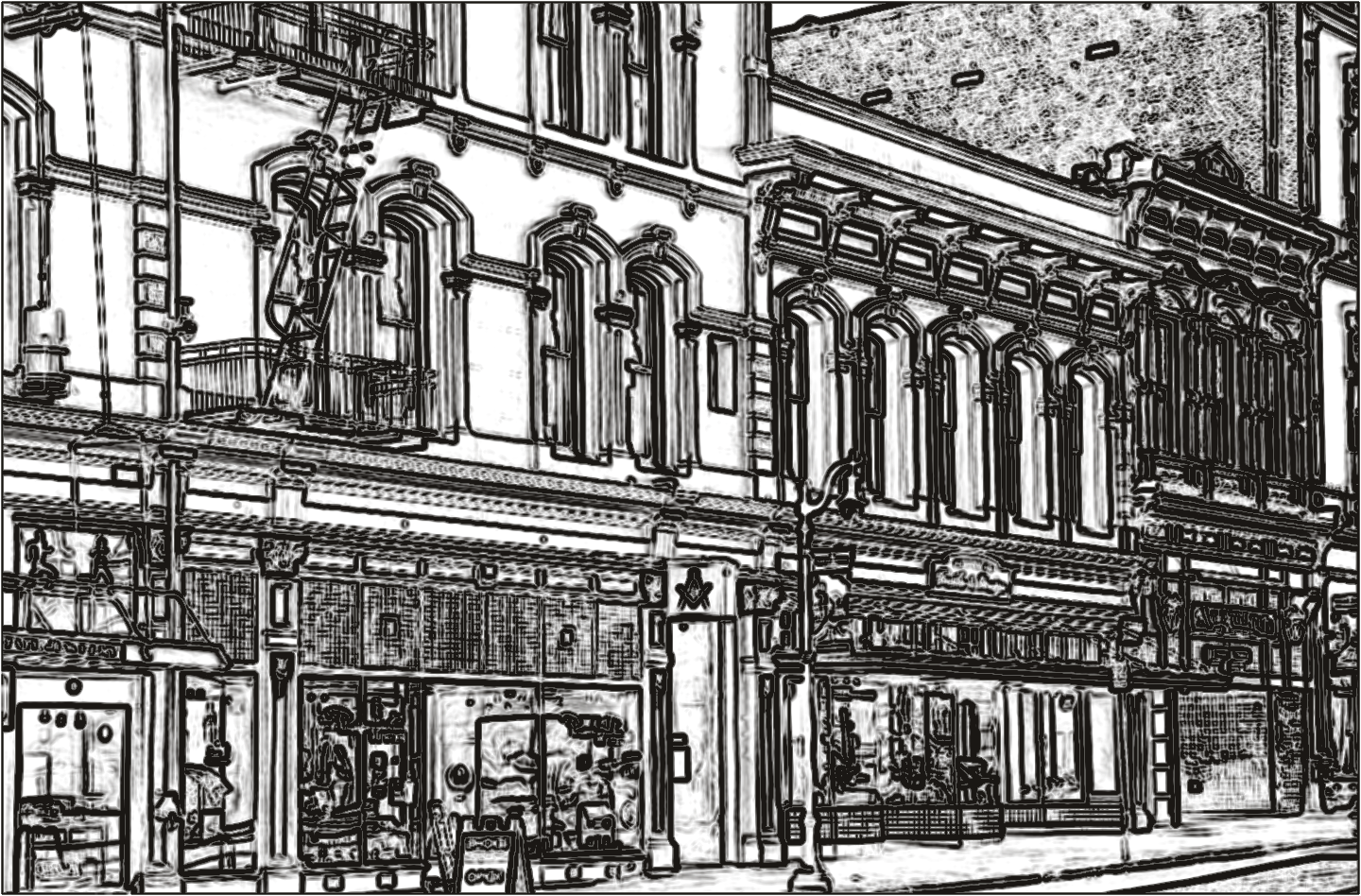
The Recipe
Begin with one intentional move.
Wander once momentum exists.
Pick the next ingredient by the moment.
Stay when somewhere feels right.
Only Saturday dinner is set.
What sounds good right now?
Pick one. Ignore the rest.
Somewhere beautiful to sitLuma →
A serious drinkBarber Lee →
Coffee and a pastryDella Fattoria →
Something to holdFLM Ceramics →
Something playfulCravin’s →
To think about other peopleCopperfield’s →
Ice cream, immediatelyAngela’s →
A change of sceneryThe river →
One more local thingThe Creamery →
To keep walkingThe map →
Change the scene
Walk toward the river.
Cross the Balshaw bridge.
Look up — the iron fronts are the whole point.
Take whichever street looks interesting.
Find a patio. Stay past one drink.
Keep walking when nothing has clicked yet.
When the buildings start raising questions: Historic Petaluma, As We Walk.
Fixed & booked
Two things are paid for. Everything below this is optional. Friday dinner is unbooked on purpose — Bijou, Luma, or wherever looks good when we’re actually hungry.
B1The Shuckery
100 Washington St · daily 3–9 · 2 min
Friday, on arrival. Oysters and a drink, downstairs from the room. Dinner from 5, bar till 11.
B2Table Culture Provisions
312 Petaluma Blvd S · Sat 5:30 pm · 8 min
Prepaid; the one hard commitment of the weekend. Ten tables, tasting menu, French hands on California produce.
SUNCheckout
And then whatever we didn’t finish.
Only this weekend
W1Downtown Sidewalk Sale
All over downtown · through Sun 2 Aug
Merchants out on the pavement all four days. It will find us.
W2FLM tile seconds sale
301 2nd St · ends Sat 10–3 · 9 min
Tile and pottery seconds, extra 10% off in studio. Saturday is the last day. Same address as A1.
W3Walnut Park Farmers Market
D St at Petaluma Blvd S · Sat 2–5 · 6 min
Produce, flowers, live music from the gazebo. Sits close to the 5:30 dinner — go early or skip.
Drinks
D1Barber Lee Spirits
120 Washington St · Wed–Thu 4–10, Fri–Sat 4–11 · 2 min
1910 brick warehouse, family distillery. Rye, bourbon and absinthe made on site; cheese and dessert counters share the room.
D2Luma Bar & Eatery
50 E Washington St · Fri–Sat 11:30–3, 4:30–9 · 4 min
Patio on the water, Mediterranean plates. Best late afternoon. Closed Mondays.
D3Mario & John’s
428 E D St · Fri–Sat 4 pm–2 am · 15 min
A tavern since 1946, now a low-lit cocktail bar with pool and shuffleboard. Across the river on East D — further than it sounds.
D4Brewsters Beer Garden
229 Water St N · Fri–Sat 11:30–10 · 5 min
Open-air, communal tables, often live music. Caveat: volume.
Food
F1Della Fattoria
141–143 Petaluma Blvd N · Thu–Sun 8–2 · 3 min
Family bakery in the 1860 US Bakery building. Pastries, bread, breakfast and lunch. No reservations, and weekends queue — go early. Closed Mon–Wed, so it’s a morning, not a dinner.
F2Petaluma Creamery
711 Western Ave · daily from 9, closes 5 · 15 min
Century-old working creamery: Spring Hill cheese, curds, sandwiches, ice cream, free samples. The most literally Petaluman thing here, and the furthest walk.
F3Angela’s Ice Cream
134 Petaluma Blvd N · Fri–Sat 12–10 · 3 min
The better pure ice cream, and the one we’ll pass anyway. River patio out back, open late enough for dessert after dinner.
F4Sax’s Joint
317 Petaluma Blvd S · daily 7–3 · 7 min
Fifties diner in the old Marvin’s room — biscuits, cinnamon rolls, burgers from breakfast on. Shuts at 3, so it’s a morning.
F5Bijou
190 Kentucky St · Fri 11–2 & 4–8:30 · 2 min
A block up the street, and Table Culture’s sister restaurant. The loose Friday-night option — no reservation, on purpose.
Browsing
S1Cravin’s Candy Emporium
151 Petaluma Blvd S · Fri–Sat 11–9 · 6 min
Theatre District. Four thousand kinds of candy, plus gelato and glass-bottled soda.
S2Copperfield’s Books
140 Kentucky St · Fri 10–6, Sat 10–7 · 1 min
Ten thousand square feet of restored brick: new upstairs, used and rare below.
S3Sidecar Mercantile
132 Petaluma Blvd N · Fri–Sat 11–6 · 3 min
Home goods, jewellery and gifts in a room that was galleries for years.
S4Poppy’s
136 Petaluma Blvd N · daily 10–5 · 3 min
Toy shop with a boba café inside, two doors from Sidecar. Five minutes is plenty — but the kids’ present, solved.
Art & craft
A1FLM Ceramics
301 2nd St · Fri 10–5, Sat 10–3 · 9 min
Handmade tile and pottery, fired here. One Warehouse District storefront shared with Petaluma Pottery and a letterpress shop. Hours flex with the firing schedule.
A2Petaluma Arts Center
230 Lakeville St · Thu–Sun 12–4 · 8 min
Historic railroad freight building. Expressions In Metal through 29 Aug, plus Drooker’s Thirty-Six Views of the Golden Gate Bridge next door.
A3Nanny Goat Gallery
215 N Water St · reopens Fri 31 July · 5 min
Enchanted and curious contemporary art, a few doors from Brewsters. Back from summer break on our Friday with three new shows — their first open day all month. Hours were Thu–Sat 1–5 before the break; check their socials.
Where it all is
★ is the hotel; every walk time above is measured from it. Tap a pin for the name.
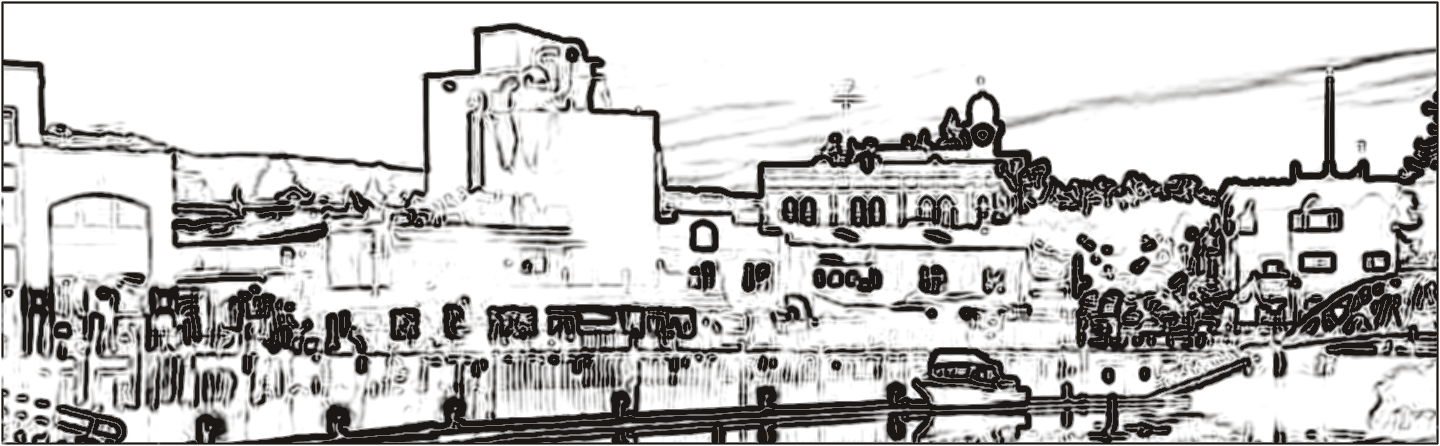
Historic Petaluma,
as we walk
as we walk
Not a route. A way of looking.
Why any of it is here
Every handsome building downtown is a by-product of one chain: farms → town → mill and warehouse → river and rail → San Francisco. Dairy, grain and eggs went down the river; the banks, shopfronts and ornament came back up it.
★
Look up
Before we leave the lobby
Hotel Petaluma, 1923 — Mediterranean Revival, five storeys, still the tallest thing downtown. A town builds a hotel this size when it expects people to arrive on business.
A
Find the back
At the river
Not a waterfront the town grew around for the view — the reason there is a town. Navigable to San Pablo Bay, it carried dairy, grain and eggs to San Francisco; by 1880 this was California’s largest shipping point for dairy. Look for broad masonry walls and loading doors.
B
Look both ways
Crossing the Balshaw bridge
Where the working town is easiest to read: ornamental front on one bank, storage and service on the other. Where you could cross decided where downtown could grow.
–
Take it seriously
On eggs, anywhere
The practical coal-lamp incubator was worked out here — debuted in 1881 by a dentist, Isaac Dias, then sold to the world and backdated to 1879 by his promoter, Lyman Byce. Incubation at scale turned poultry into an industry: hatcheries, feed mills, packing houses, banks, a national nickname. Eggs built more than farms.
C
Above the awning
On Petaluma Boulevard
The ground floor has been replaced many times over. The original building is upstairs — tall narrow windows, brackets, cornices, dates set into the parapet. Look above the awning to find the real building. The McNear Building, 1911, is the easiest one to practise on — and its cast-iron neighbour at 21–23 is the same family, twenty-five years older.
D
Find the date
At the Masonic corner
Petaluma Blvd N at Western — brick Italianate, 1882, and the clearest cast iron downtown. Iron let a merchant buy columns and ornament ready-made rather than carved from stone: look for thin columns and crisp repeated detail set into brick. Corners got the money, because two streets could see you at once.
E
Past the shopfront
On Kentucky Street
The old Opera House is on the National Register in its own right. A town that only worked would never have built it; the building is the receipt. Banks nearby made the same argument in stone — classical because classical meant permanence.
–
Compare the two
In an alley, or round the back
The front sold. The back worked. One building, two faces: ornament and display windows on the street; plain brick, patched masonry and loading doors behind.
F
Find the old use
In the Warehouse District
Around Second Street: mills and sheds now holding a tile studio, a letterpress shop, a community clay studio. Preservation here has meant continued use, not untouched survival.
G
Widen the story
Near the depot
The rail corridor and old freight depot — now the Arts Center — are the other half of the story. Farms, roads, rail and river all had to connect before any of it paid.
–
Be sceptical
Why so much survives
The bedrock-and-1906 story is repeated far more often than it is sourced. What is solid: the district went on the National Register in 1995, and where other Bay Area towns lost their prewar cores, Petaluma’s stayed in use. The museum at 20 Fourth Street keeps the actual record.
–
Go back further
Before any of it
This is Coast Miwok homeland; the name comes from a Coast Miwok village name, usually read as a hill or sloping ridge. It later fell inside Rancho Petaluma, the Mexican land grant associated with Vallejo. The commercial town is one chapter of a much longer landscape.
The buildings above, on a map
★ is the hotel. A–G match the lettered notes above; a dashed – means that note applies anywhere, not at one spot. Coloured codes (F2, W3) are places from the list above; the grey pin is the museum, which has no entry of its own.
Read a facade, top down
Parapet — the wall above the roofline, often carrying the name and date · Cornice — the projecting shelf at the top, usually lost behind signage · Window hood — the cap over an upper window, a cheap way to look expensive · Pilaster — a flat column against the wall, dividing the facade · Bay — one vertical stack of windows, count them for the original lot width · Transom — glass above a door, for light before electricity · Cast iron — manufactured ornament, crisp and repeated, bolted to brick · Storefront — changes every generation; ignore it.
A confession
I knew none of this a week ago. I read up on it so we’d have a reason to look around a bit more, and so that when we stop in front of something, we’d have somewhere to quickly dig to learn more.
Hours and addresses checked 30 July 2026 against each business’s own Yelp listing — tap through for the live version rather than trusting this page. Walk times are estimates from the hotel door. History dates and descriptions are checked against the National Register nomination for the Petaluma Historic Commercial District (listed 1995); the Petaluma Historical Library & Museum at 20 Fourth Street — itself a former Carnegie library, and itself listed — keeps the real record, and is where the incubator story was finally straightened out. Map data © OpenStreetMap contributors, tiles by CARTO.
Our Petaluma Weekend